News & Updates

A Safer Path Forward: How Genetic Testing is Changing Chemotherapy for GI Cancer Patients

Thursday, September 25, 2025

In the ongoing fight against cancer, every breakthrough brings new hope—and the latest discovery from researchers at the University of Pennsylvania is doing just that. A new study has found that simple genetic testing before chemotherapy can dramatically reduce dangerous side effects for patients battling gastrointestinal (GI) cancers, like colorectal and pancreatic cancer.

Led by Dr. Sony Tuteja, the research showed that testing for two specific genes, DPYD and UGT1A1, can help doctors personalize chemotherapy doses. Why does that matter? Because about 1 in 12 people carry genetic variants that make it harder for their bodies to process certain chemotherapy drugs. Without knowing this, patients can suffer severe side effects, including low blood counts, mouth sores, and debilitating fatigue.

But when patients were tested ahead of time, and their doses adjusted accordingly, serious side effects were cut in half. That means fewer complications, fewer hospital visits, and more people able to continue their fight against cancer without unnecessary setbacks.

This kind of precision medicine is a powerful example of how science is evolving to treat not just the disease, but the individual.

At Philly Fights Cancer, we are proud to help fund lifesaving research like this. It’s innovations like these that bring us closer to a future where cancer treatments are not only more effective—but safer, smarter, and more personal.

Read more on Penn Medicine’s website: Genetic testing lowers risks from chemo for GI cancer | Penn Medicine


Want to stay informed?

Sign-up for Our Newsletter
for Philly Fights Cancer News.

Sign Up

In the ongoing fight against cancer, every breakthrough brings new hope—and the latest discovery from researchers at the University of Pennsylvania is doing just that. A new study has found that simple genetic testing before chemotherapy can dramatically reduce dangerous side effects for patients battling gastrointestinal (GI) cancers, like colorectal and pancreatic cancer.

Led by Dr. Sony Tuteja, the research showed that testing for two specific genes, DPYD and UGT1A1, can help doctors personalize chemotherapy doses. Why does that matter? Because about 1 in 12 people carry genetic variants that make it harder for their bodies to process certain chemotherapy drugs. Without knowing this, patients can suffer severe side effects, including low blood counts, mouth sores, and debilitating fatigue.

But when patients were tested ahead of time, and their doses adjusted accordingly, serious side effects were cut in half. That means fewer complications, fewer hospital visits, and more people able to continue their fight against cancer without unnecessary setbacks.

This kind of precision medicine is a powerful example of how science is evolving to treat not just the disease, but the individual.

At Philly Fights Cancer, we are proud to help fund lifesaving research like this. It’s innovations like these that bring us closer to a future where cancer treatments are not only more effective—but safer, smarter, and more personal.

Read more on Penn Medicine’s website: Genetic testing lowers risks from chemo for GI cancer | Penn Medicine


News & Updates

Capstan Therapeutics and AbbVie: A New Chapter in Immune System Reprogramming

Tuesday, August 12, 2025

In a landmark moment for immune-based therapies, AbbVie is acquiring Capstan Therapeutics—a biotech startup launched from the University of Pennsylvania—for $2.1 billion. The move underscores growing confidence in in-vivo CAR-T technology, an innovative way to reprogram immune cells directly inside the body.

Capstan’s work builds on the groundbreaking CAR-T therapy pioneered at Penn by Dr. Carl June, which has already transformed cancer treatment for countless patients. Traditional CAR-T involves removing a patient’s T cells, engineering them in a lab, and then reinfusing them—a complex, time-intensive, and costly process. Capstan’s approach aims to streamline this into a single injection powered by mRNA and lipid nanoparticles, similar to the technology used in COVID-19 vaccines.

While Capstan is first focusing on autoimmune diseases, the implications for cancer care are profound. By simplifying treatment and reducing costs, this approach could one day make life-saving therapies more accessible to patients everywhere. With AbbVie’s global resources, Capstan is poised to accelerate trials and move closer to bringing these cutting-edge therapies to the people who need them most.

For Philly Fights Cancer, this story comes full circle. Our mission has always been to raise funds and awareness for the very research that began here in Philadelphia—and that research is now shaping the future of cancer treatment worldwide. Every breakthrough like this proves that the work happening at Penn, and the support of our community, brings us closer to a cancer-free world.

Learn more about this important progress at the link below.

Link: Penn start-up Capstan acquired by AbbVie for $2.1 billion

Want to stay informed?

Sign-up for Our Newsletter
for Philly Fights Cancer News.

Sign Up

In a landmark moment for immune-based therapies, AbbVie is acquiring Capstan Therapeutics—a biotech startup launched from the University of Pennsylvania—for $2.1 billion. The move underscores growing confidence in in-vivo CAR-T technology, an innovative way to reprogram immune cells directly inside the body.

Capstan’s work builds on the groundbreaking CAR-T therapy pioneered at Penn by Dr. Carl June, which has already transformed cancer treatment for countless patients. Traditional CAR-T involves removing a patient’s T cells, engineering them in a lab, and then reinfusing them—a complex, time-intensive, and costly process. Capstan’s approach aims to streamline this into a single injection powered by mRNA and lipid nanoparticles, similar to the technology used in COVID-19 vaccines.

While Capstan is first focusing on autoimmune diseases, the implications for cancer care are profound. By simplifying treatment and reducing costs, this approach could one day make life-saving therapies more accessible to patients everywhere. With AbbVie’s global resources, Capstan is poised to accelerate trials and move closer to bringing these cutting-edge therapies to the people who need them most.

For Philly Fights Cancer, this story comes full circle. Our mission has always been to raise funds and awareness for the very research that began here in Philadelphia—and that research is now shaping the future of cancer treatment worldwide. Every breakthrough like this proves that the work happening at Penn, and the support of our community, brings us closer to a cancer-free world.

Learn more about this important progress at the link below.

Link: Penn start-up Capstan acquired by AbbVie for $2.1 billion

News & Updates

HUP Honored for Innovation in Community Health and Cancer Care Access

Wednesday, July 2, 2025

The Hospital of the University of Pennsylvania (HUP) has received two 2025 Achievement Awards from the Hospital and Healthsystem Association of Pennsylvania (HAP), recognizing groundbreaking programs that tackle food insecurity and improve cancer care access.

One initiative, A Hospital Based Food Insecurity Program, earned the Community Champions Award for addressing a critical social determinant of health. Launched in 2020 by HUP nurses, the program screens patients for food insecurity and offers free, nutritionally tailored groceries through an in-hospital pantry. With support from partners like Philabundance, it has distributed nearly 100,000 pounds of food to date. The program also trains university students in addressing health disparities through community-based learning.

HUP’s second award, the Optimal Operations Award, went to the Weekend Infusion Services for Oncology Patients project, which expanded the Abramson Cancer Center’s Oncology Evaluation Center hours to seven days a week. This urgent care model helps cancer patients avoid unnecessary ER visits and hospital stays by providing timely infusions, tests, and treatments. The expanded access not only improves patient experience and outcomes but also offers greater flexibility for those juggling work and care.

These award-winning efforts exemplify HUP’s commitment to high-quality, equitable care that meets patients’ needs inside and outside the hospital. Philly Fights Cancer is #PennProud to support and celebrate the innovative work being done at Abramson Cancer Center to advance equitable, patient-centered care and improve the health of our communities. Read more about these awards at the link below:

Hospital honored for food aid, expanded cancer care access | Penn Medicine

Want to stay informed?

Sign-up for Our Newsletter
for Philly Fights Cancer News.

Sign Up

The Hospital of the University of Pennsylvania (HUP) has received two 2025 Achievement Awards from the Hospital and Healthsystem Association of Pennsylvania (HAP), recognizing groundbreaking programs that tackle food insecurity and improve cancer care access.

One initiative, A Hospital Based Food Insecurity Program, earned the Community Champions Award for addressing a critical social determinant of health. Launched in 2020 by HUP nurses, the program screens patients for food insecurity and offers free, nutritionally tailored groceries through an in-hospital pantry. With support from partners like Philabundance, it has distributed nearly 100,000 pounds of food to date. The program also trains university students in addressing health disparities through community-based learning.

HUP’s second award, the Optimal Operations Award, went to the Weekend Infusion Services for Oncology Patients project, which expanded the Abramson Cancer Center’s Oncology Evaluation Center hours to seven days a week. This urgent care model helps cancer patients avoid unnecessary ER visits and hospital stays by providing timely infusions, tests, and treatments. The expanded access not only improves patient experience and outcomes but also offers greater flexibility for those juggling work and care.

These award-winning efforts exemplify HUP’s commitment to high-quality, equitable care that meets patients’ needs inside and outside the hospital. Philly Fights Cancer is #PennProud to support and celebrate the innovative work being done at Abramson Cancer Center to advance equitable, patient-centered care and improve the health of our communities. Read more about these awards at the link below:

Hospital honored for food aid, expanded cancer care access | Penn Medicine

News & Updates

Advancing Safer, Smarter Cancer Therapies—With Support from Philly Fights Cancer

Sunday, June 22, 2025

In a significant leap forward for immunotherapy, scientists have discovered a safer, more precise way to engineer CAR-T cells—specialized immune cells capable of recognizing and destroying cancer. Traditionally, researchers have relied on CRISPR to modify these cells. While groundbreaking, CRISPR’s method of cutting DNA can sometimes result in unintended consequences, including genomic instability and cellular stress.

Now, researchers are turning to an innovative tool known as a base editor, which allows scientists to make pinpoint changes to DNA without cutting it. This gentler, more exact approach results in CAR-T cells that are stronger, longer-lasting, and less prone to cellular damage. In laboratory models, these refined cells demonstrate enhanced durability and cancer-fighting power—marking a pivotal step toward more reliable, scalable, and patient-safe therapies.

These advancements don’t happen in a vacuum. Breakthroughs like this rely on philanthropic investment to move from the lab to life-saving clinical trials, especially in a landscape where traditional funding can fall short. Philly Fights Cancer is proud to help fill that critical funding gap by supporting revolutionary CAR-T research at the Abramson Cancer Center.

Together, we’re not just imagining a better future for cancer care, we’re building it.

Read more about this research and the future of CAR-T therapies at the link below.

Quadruple adenine base–edited allogeneic CAR T cells outperform CRISPR/Cas9 nuclease–engineered T cells | PNAS

Want to stay informed?

Sign-up for Our Newsletter
for Philly Fights Cancer News.

Sign Up

In a significant leap forward for immunotherapy, scientists have discovered a safer, more precise way to engineer CAR-T cells—specialized immune cells capable of recognizing and destroying cancer. Traditionally, researchers have relied on CRISPR to modify these cells. While groundbreaking, CRISPR’s method of cutting DNA can sometimes result in unintended consequences, including genomic instability and cellular stress.

Now, researchers are turning to an innovative tool known as a base editor, which allows scientists to make pinpoint changes to DNA without cutting it. This gentler, more exact approach results in CAR-T cells that are stronger, longer-lasting, and less prone to cellular damage. In laboratory models, these refined cells demonstrate enhanced durability and cancer-fighting power—marking a pivotal step toward more reliable, scalable, and patient-safe therapies.

These advancements don’t happen in a vacuum. Breakthroughs like this rely on philanthropic investment to move from the lab to life-saving clinical trials, especially in a landscape where traditional funding can fall short. Philly Fights Cancer is proud to help fill that critical funding gap by supporting revolutionary CAR-T research at the Abramson Cancer Center.

Together, we’re not just imagining a better future for cancer care, we’re building it.

Read more about this research and the future of CAR-T therapies at the link below.

Quadruple adenine base–edited allogeneic CAR T cells outperform CRISPR/Cas9 nuclease–engineered T cells | PNAS

News & Updates

Madlyn Abramson’s Legacy Lives on This Mother’s Day

Sunday, May 11, 2025

This Mother’s Day marks five years since the passing of Madlyn Abramson — a beloved mother, friend, and visionary whose generosity continues to shape the future of cancer care. Madlyn’s bold spirit and philanthropic leadership helped lay the foundation for Philly Fights Cancer and transformed how Penn Medicine advances cancer research and delivers compassionate care. Her legacy lives on in every breakthrough, every patient helped, and every life saved.

Philly Fights Cancer is proud to carry her mission forward by funding the life-saving research and clinical trials at Penn Medicine’s Abramson Cancer Center — the place that bears her name and carries her heart.

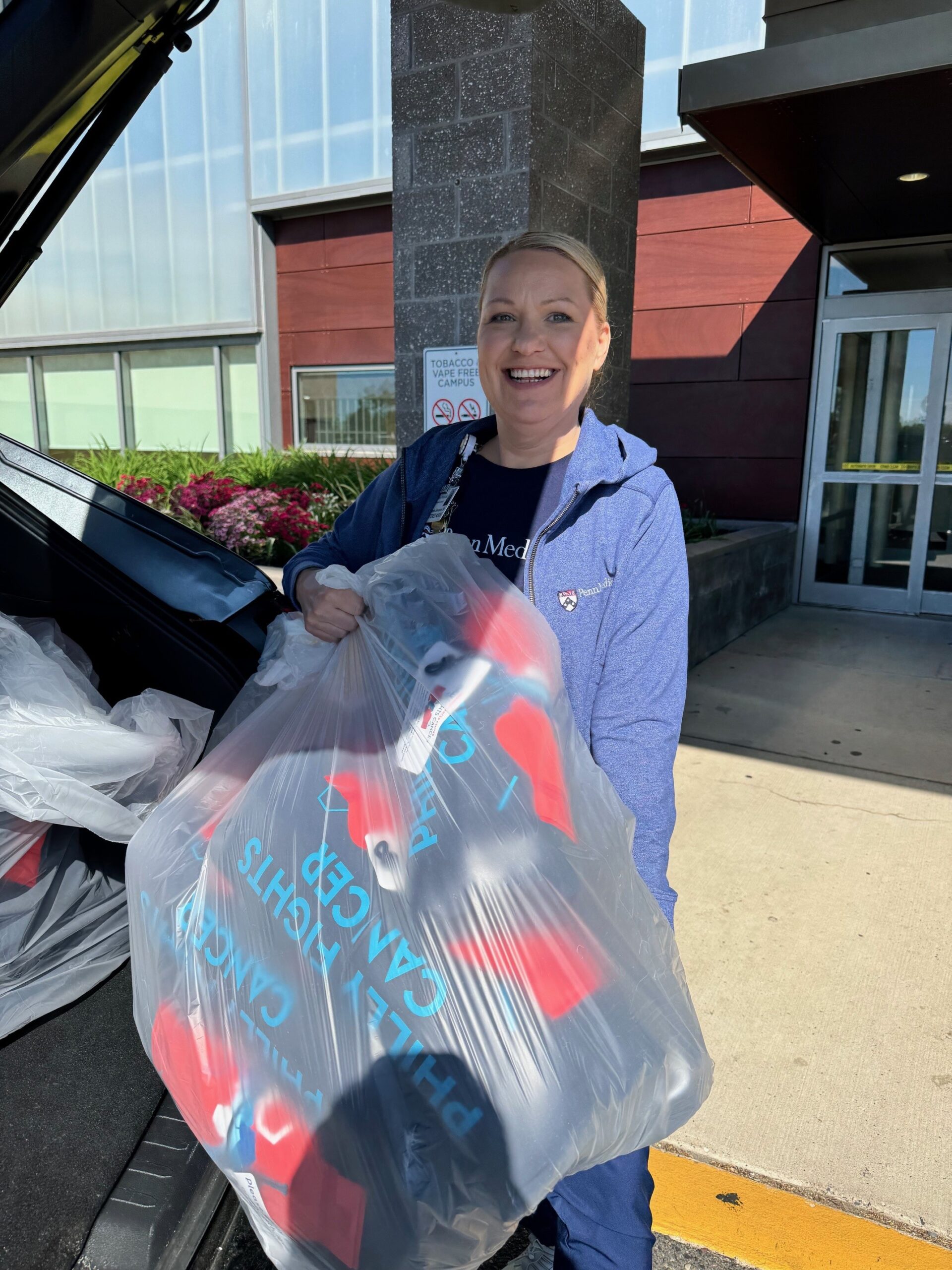
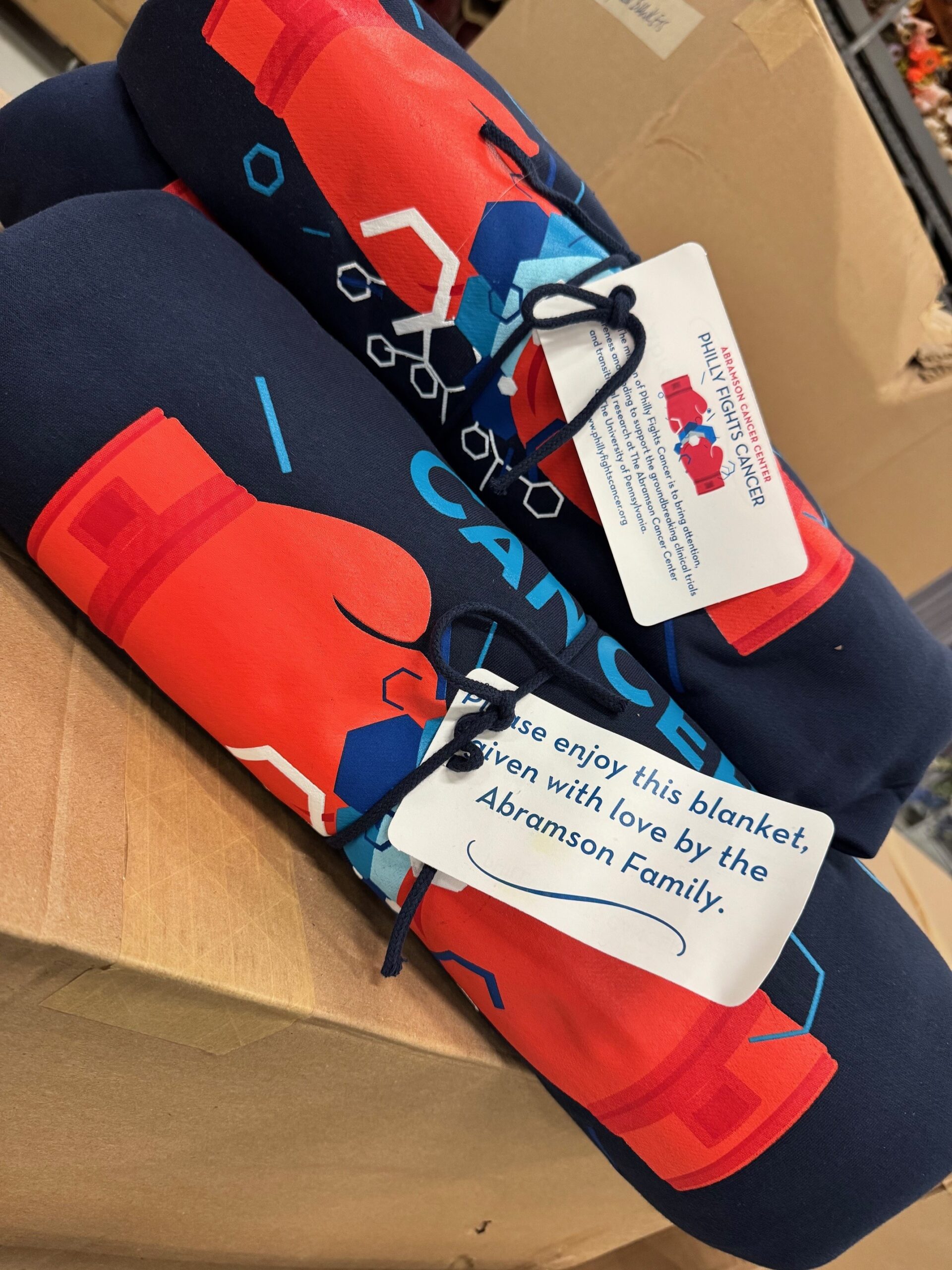
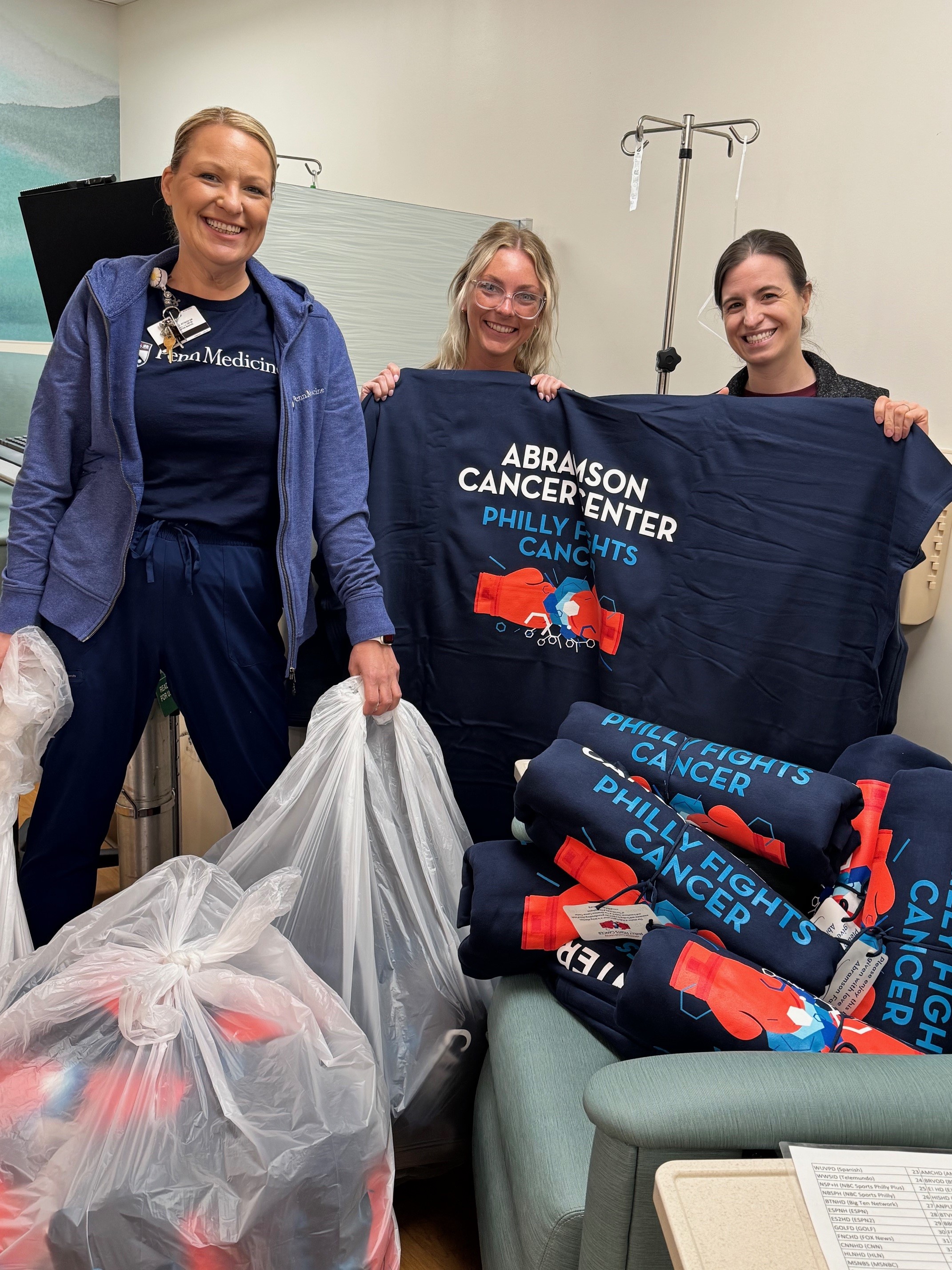
Pictured: Abramson Cancer Center nurses assist in distributing our Philly Fights Cancer blankets, which are provided to some patients undergoing treatment to help make their visit more comfortable.

Want to stay informed?

Sign-up for Our Newsletter
for Philly Fights Cancer News.

Sign Up

This Mother’s Day marks five years since the passing of Madlyn Abramson — a beloved mother, friend, and visionary whose generosity continues to shape the future of cancer care. Madlyn’s bold spirit and philanthropic leadership helped lay the foundation for Philly Fights Cancer and transformed how Penn Medicine advances cancer research and delivers compassionate care. Her legacy lives on in every breakthrough, every patient helped, and every life saved.

Philly Fights Cancer is proud to carry her mission forward by funding the life-saving research and clinical trials at Penn Medicine’s Abramson Cancer Center — the place that bears her name and carries her heart.

Pictured: Abramson Cancer Center nurses assist in distributing our Philly Fights Cancer blankets, which are provided to some patients undergoing treatment to help make their visit more comfortable.

News & Updates

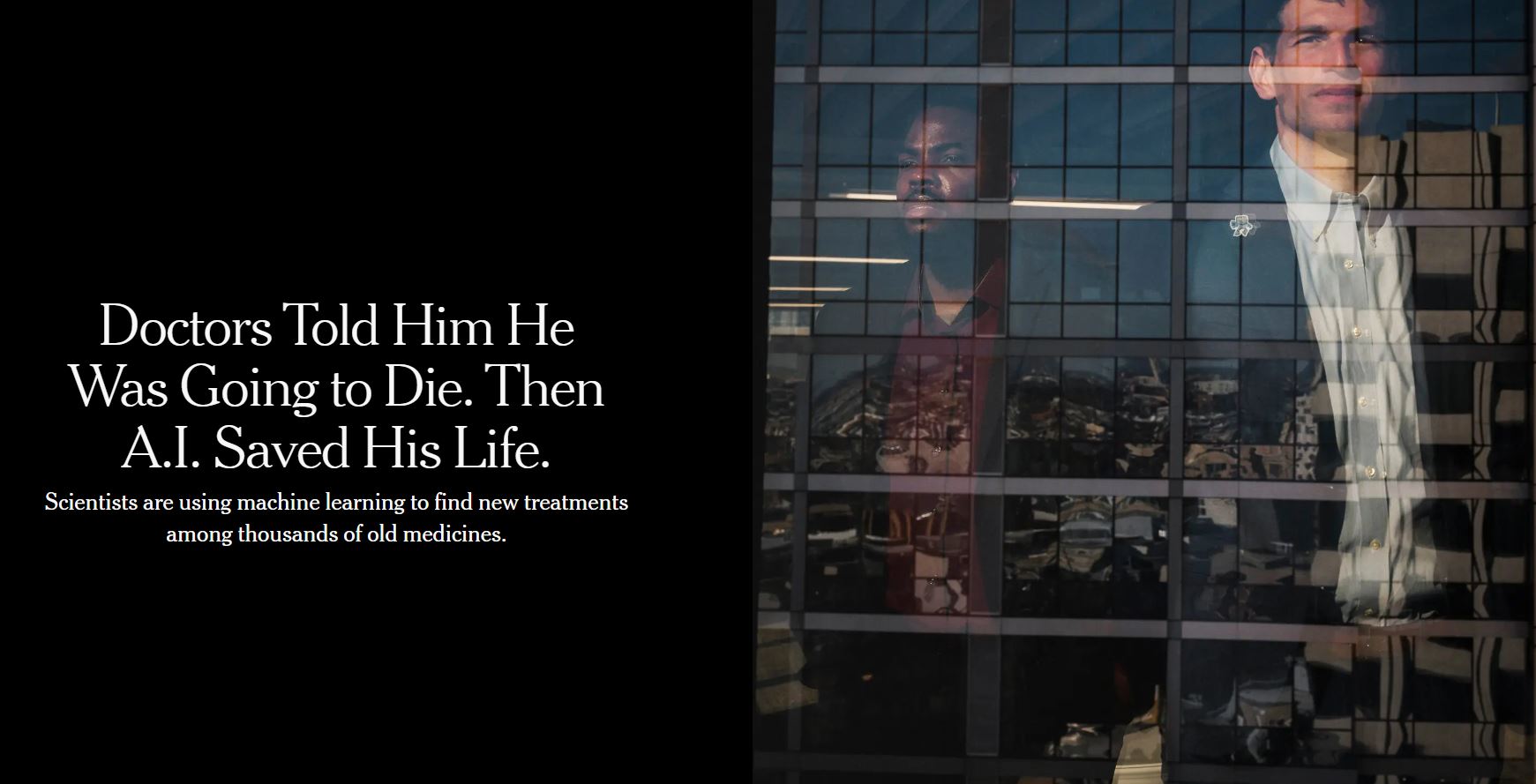
Doctor’s Told Him He Was Going to Die. Then AI Saved His Life.

Friday, April 18, 2025

A little over a year ago, Joseph Coates was told there was only one thing left to decide. Did he want to die at home, or in the hospital?

For months, he had been battling a rare blood disorder called POEMS syndrome, which had left him with numb hands and feet, an enlarged heart and failing kidneys. He became too sick to receive a stem cell transplant — one of the only treatments that could have put him into remission.

But Coates’s girlfriend, Tara Theobald, wasn’t ready to quit. So she sent an email begging for help to a doctor in Philadelphia named David Fajgenbaum, whom the couple met a year earlier at a rare disease summit.

By the next morning, Dr. Fajgenbaum had replied, suggesting an unconventional combination of chemotherapy, immunotherapy and steroids previously untested as a treatment for Coates’s disorder.

Within a week, Coates was responding to treatment. In four months, he was healthy enough for a stem cell transplant. Today, he’s in remission.

The lifesaving drug regimen wasn’t thought up by the doctor, or any person. It had been spit out by an artificial intelligence model.

In labs around the world, scientists are using A.I. to search among existing medicines for treatments that work for rare diseases. Drug repurposing, as it’s called, is not new, but the use of machine learning is speeding up the process — and could expand the treatment possibilities for people with rare diseases and few options.

Thanks to versions of the technology developed by Dr. Fajgenbaum’s team at the University of Pennsylvania and elsewhere, drugs are being quickly repurposed for conditions including rare and aggressive cancers, fatal inflammatory disorders and complex neurological conditions. And often, they’re working.

At the University of Pennsylvania, Dr. Fajgenbaum’s platform compares roughly 4,000 drugs against 18,500 diseases. For each disease, pharmaceuticals get a score based on the likelihood of efficacy. Once the predictions are made, a team of researchers combs through them to find promising ideas, then performs lab tests or connects with doctors willing to try the drugs on patients.

To read the full article from the New York Times here: https://www.nytimes.com/2025/03/20/well/ai-drug-repurposing.html

New York Times Cover Page

Want to stay informed?

Sign-up for Our Newsletter
for Philly Fights Cancer News.

Sign Up

A little over a year ago, Joseph Coates was told there was only one thing left to decide. Did he want to die at home, or in the hospital?

For months, he had been battling a rare blood disorder called POEMS syndrome, which had left him with numb hands and feet, an enlarged heart and failing kidneys. He became too sick to receive a stem cell transplant — one of the only treatments that could have put him into remission.

But Coates’s girlfriend, Tara Theobald, wasn’t ready to quit. So she sent an email begging for help to a doctor in Philadelphia named David Fajgenbaum, whom the couple met a year earlier at a rare disease summit.

By the next morning, Dr. Fajgenbaum had replied, suggesting an unconventional combination of chemotherapy, immunotherapy and steroids previously untested as a treatment for Coates’s disorder.

Within a week, Coates was responding to treatment. In four months, he was healthy enough for a stem cell transplant. Today, he’s in remission.

The lifesaving drug regimen wasn’t thought up by the doctor, or any person. It had been spit out by an artificial intelligence model.

In labs around the world, scientists are using A.I. to search among existing medicines for treatments that work for rare diseases. Drug repurposing, as it’s called, is not new, but the use of machine learning is speeding up the process — and could expand the treatment possibilities for people with rare diseases and few options.

Thanks to versions of the technology developed by Dr. Fajgenbaum’s team at the University of Pennsylvania and elsewhere, drugs are being quickly repurposed for conditions including rare and aggressive cancers, fatal inflammatory disorders and complex neurological conditions. And often, they’re working.

At the University of Pennsylvania, Dr. Fajgenbaum’s platform compares roughly 4,000 drugs against 18,500 diseases. For each disease, pharmaceuticals get a score based on the likelihood of efficacy. Once the predictions are made, a team of researchers combs through them to find promising ideas, then performs lab tests or connects with doctors willing to try the drugs on patients.

To read the full article from the New York Times here: https://www.nytimes.com/2025/03/20/well/ai-drug-repurposing.html

New York Times Cover Page

News & Updates

No evidence that CAR T cell therapy causes secondary cancers, Penn study finds

Thursday, March 20, 2025

A new study from Penn Medicine’s Abramson Cancer Center, published in Nature Medicine, confirms that CAR T cell therapy does not cause secondary cancers. Researchers analyzed 783 patients who received CAR T therapy at Penn Medicine and the Children’s Hospital of Philadelphia and found that while 18 patients developed secondary cancers, none were linked to CAR T treatment. Instead, these rare cases were associated with prior treatments like chemotherapy and radiation, which are known to increase cancer risk.


CAR T therapy—pioneered at Penn—works by modifying a patient’s own T cells to better recognize and attack cancer. Since its FDA approval in 2017, it has helped more than 30,000 patients with hard-to-treat blood cancers, with some experiencing remissions lasting over a decade. Concerns about potential risks led the FDA to add a safety label warning in 2024, but this new research provides strong reassurance that CAR T therapy remains a safe and life-saving option.


Breakthroughs like CAR T therapy don’t happen overnight. They’re made possible by years of clinical trials and research, which Philly Fights Cancer has been proud to help fund since 2015. By supporting cutting-edge science, Philly Fights Cancer helps turn discoveries into real treatments—giving patients access to the most advanced cancer care available today.


Read more about this important study at the link below. No evidence that CAR T cell therapy causes secondary cancers

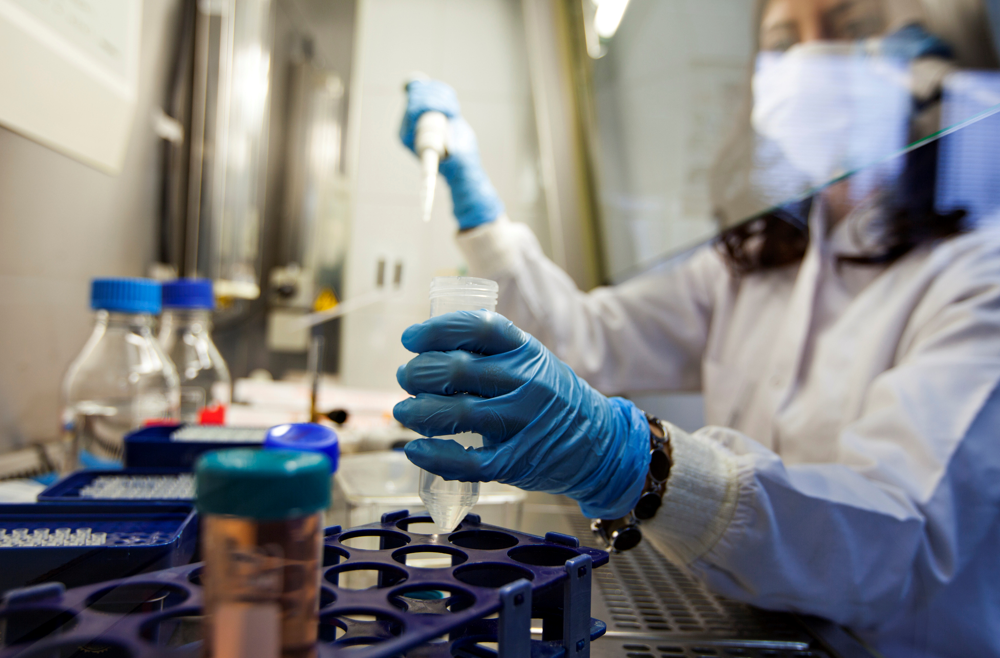
Doctor putting samples into sample cups

Want to stay informed?

Sign-up for Our Newsletter
for Philly Fights Cancer News.

Sign Up

A new study from Penn Medicine’s Abramson Cancer Center, published in Nature Medicine, confirms that CAR T cell therapy does not cause secondary cancers. Researchers analyzed 783 patients who received CAR T therapy at Penn Medicine and the Children’s Hospital of Philadelphia and found that while 18 patients developed secondary cancers, none were linked to CAR T treatment. Instead, these rare cases were associated with prior treatments like chemotherapy and radiation, which are known to increase cancer risk.


CAR T therapy—pioneered at Penn—works by modifying a patient’s own T cells to better recognize and attack cancer. Since its FDA approval in 2017, it has helped more than 30,000 patients with hard-to-treat blood cancers, with some experiencing remissions lasting over a decade. Concerns about potential risks led the FDA to add a safety label warning in 2024, but this new research provides strong reassurance that CAR T therapy remains a safe and life-saving option.


Breakthroughs like CAR T therapy don’t happen overnight. They’re made possible by years of clinical trials and research, which Philly Fights Cancer has been proud to help fund since 2015. By supporting cutting-edge science, Philly Fights Cancer helps turn discoveries into real treatments—giving patients access to the most advanced cancer care available today.


Read more about this important study at the link below. No evidence that CAR T cell therapy causes secondary cancers

Doctor putting samples into sample cups

News & Updates

The Compassionate Team Behind CART Cancer Breakthroughs

Tuesday, February 11, 2025

Joanne Shea, a clinical research nurse at Penn Medicine, has been involved in pioneering CAR T cell therapy for over a decade. This therapy, which modifies a patient’s immune cells to fight cancer, gained FDA approval in 2018 and is expanding to treat solid tumors like glioblastoma. Shea administers treatments, follows up with patients, and collects data.

A dedicated team, including scientists like Dr. Carl June, Dr. Bruce Levine, and Dr. David Porter, supports the therapy's success. The Clinical Trials Unit recently received Penn Medicine’s Innovations in Clinical Research Operations Award for improving clinical research. Many patients are part of first-in-human trials, requiring creativity and adaptability.

The team emphasizes patient care, with research coordinator Reenie Martins working closely with glioblastoma patients to schedule appointments and provide support. Despite the challenges, they are driven by the goal of finding better cancer cures, with patients contributing to the advancement of future treatments.

Penn Medicine is expanding CAR T cell therapy, adapting techniques for new areas like brain cancer, with safety and data monitoring as priorities. The team's commitment to advancing cancer therapies and offering hope to patients continues to drive their work in cellular immunotherapy.

To read more about the team's work with CAR T therapy, visit the link below.

https://www.pennmedicine.org/news/news-blog/2025/january/the-compassionate-team-behind-car-t-cancer-breakthroughsThe compassionate team behind CAR T cancer breakthroughs

group of doctors looking at documents

Want to stay informed?

Sign-up for Our Newsletter
for Philly Fights Cancer News.

Sign Up

Joanne Shea, a clinical research nurse at Penn Medicine, has been involved in pioneering CAR T cell therapy for over a decade. This therapy, which modifies a patient’s immune cells to fight cancer, gained FDA approval in 2018 and is expanding to treat solid tumors like glioblastoma. Shea administers treatments, follows up with patients, and collects data.

A dedicated team, including scientists like Dr. Carl June, Dr. Bruce Levine, and Dr. David Porter, supports the therapy's success. The Clinical Trials Unit recently received Penn Medicine’s Innovations in Clinical Research Operations Award for improving clinical research. Many patients are part of first-in-human trials, requiring creativity and adaptability.

The team emphasizes patient care, with research coordinator Reenie Martins working closely with glioblastoma patients to schedule appointments and provide support. Despite the challenges, they are driven by the goal of finding better cancer cures, with patients contributing to the advancement of future treatments.

Penn Medicine is expanding CAR T cell therapy, adapting techniques for new areas like brain cancer, with safety and data monitoring as priorities. The team's commitment to advancing cancer therapies and offering hope to patients continues to drive their work in cellular immunotherapy.

To read more about the team's work with CAR T therapy, visit the link below.

https://www.pennmedicine.org/news/news-blog/2025/january/the-compassionate-team-behind-car-t-cancer-breakthroughsThe compassionate team behind CAR T cancer breakthroughs

group of doctors looking at documents

News & Updates

New Year, Same Mission

Tuesday, January 14, 2025

Philly Fights Cancer is proud to share stories of resilience and strength from the warriors of the Abramson Cancer Center to remind us all “Why We Fight”. This month, we are highlighting the Horn, Rubin, and Ashley families who have graciously allowed us to share their stories.

"In 2022 my daughter Darcy was diagnosed with Ewing’s sarcoma, less than two years after my husband Fred was successfully treated for Lymphoma of the Central Nervous System. Both were treated at Penn’s Abramson Cancer Center, and both are thankfully in remission. My family is forever grateful to Penn. With the incredible support of our friends and family we were able to raise over $120,000 for Sarcoma research between Penn’s Step’s to Cure Sarcoma and the AACR Philadelphia Marathon/The D- Team. Funding research ultimately saves lives and families like mine." -Karen Horn, Philly Fights Cancer Committee Member.

"My mother and my sister are breast cancer survivors. My Mother was first diagnosed in her late 60’s and lived a full life until the age of 92. My sister was diagnosed at 40 years old and is now 62. I will always be grateful for the care that they received at The Abramson Cancer Center" - Linda Rubin, Philly Fights Cancer Committee Member.

“Thank you for giving me 8 more years with my son and giving me the chance to meet my amazing wife. This has been such a hard time for our family. It is easy to forget that it isn’t just the patient who struggles with cancer." -Thomas Ashley, Abramson Cancer Center Patient.

To help join us in the fight against cancer and raise funds that help support life-saving cancer research and clinical trials, visit the link below.

Giving to Penn

male patient in a mask holding a thumbs upThree women smiling and posing for a photofather and daughter posing in front of Philly Fights Cancer backdrop with boxing gloves

Want to stay informed?

Sign-up for Our Newsletter
for Philly Fights Cancer News.

Sign Up

Philly Fights Cancer is proud to share stories of resilience and strength from the warriors of the Abramson Cancer Center to remind us all “Why We Fight”. This month, we are highlighting the Horn, Rubin, and Ashley families who have graciously allowed us to share their stories.

"In 2022 my daughter Darcy was diagnosed with Ewing’s sarcoma, less than two years after my husband Fred was successfully treated for Lymphoma of the Central Nervous System. Both were treated at Penn’s Abramson Cancer Center, and both are thankfully in remission. My family is forever grateful to Penn. With the incredible support of our friends and family we were able to raise over $120,000 for Sarcoma research between Penn’s Step’s to Cure Sarcoma and the AACR Philadelphia Marathon/The D- Team. Funding research ultimately saves lives and families like mine." -Karen Horn, Philly Fights Cancer Committee Member.

"My mother and my sister are breast cancer survivors. My Mother was first diagnosed in her late 60’s and lived a full life until the age of 92. My sister was diagnosed at 40 years old and is now 62. I will always be grateful for the care that they received at The Abramson Cancer Center" - Linda Rubin, Philly Fights Cancer Committee Member.

“Thank you for giving me 8 more years with my son and giving me the chance to meet my amazing wife. This has been such a hard time for our family. It is easy to forget that it isn’t just the patient who struggles with cancer." -Thomas Ashley, Abramson Cancer Center Patient.

To help join us in the fight against cancer and raise funds that help support life-saving cancer research and clinical trials, visit the link below.

Giving to Penn

male patient in a mask holding a thumbs upThree women smiling and posing for a photofather and daughter posing in front of Philly Fights Cancer backdrop with boxing gloves

News & Updates

A Year After Winning the Nobel Prize, Penn’s mRNA Research is Revving Up

Thursday, December 12, 2024

A year after winning the 2023 Nobel Prize, Katalin Karikó and Drew Weissman’s mRNA research continues to drive rapid advancements in medicine. Based at the Penn Institute for RNA Innovation, Weissman leads a growing team focused on expanding mRNA technology beyond COVID-19 vaccines. Recent efforts include developing vaccines for diseases like malaria, norovirus, HIV, Lyme disease, and C. diff, with promising preclinical results. Researchers are also working on “pan” vaccines to target multiple virus strains, such as flu and coronaviruses.

The lab is exploring mRNA’s potential in cancer treatment by targeting tumor defenses and advancing veterinary health through the Penn Vet-mRNA Research Initiative, which seeks to prevent diseases in livestock to reduce zoonotic risks. Supported by the NSF-funded AI-driven RNA Foundry, researchers are using artificial intelligence to enhance mRNA design and production. Weissman emphasizes the transformative potential of their work, inspired by the real-world impact of their research on COVID-19 vaccine recipients.

Philly Fights Cancer is proud to fundraise for the research and lab requirements that make discoveries like mRNA possible. Read the full article from Penn Medicine at the link.

glass case holding medals

Want to stay informed?

Sign-up for Our Newsletter
for Philly Fights Cancer News.

Sign Up

A year after winning the 2023 Nobel Prize, Katalin Karikó and Drew Weissman’s mRNA research continues to drive rapid advancements in medicine. Based at the Penn Institute for RNA Innovation, Weissman leads a growing team focused on expanding mRNA technology beyond COVID-19 vaccines. Recent efforts include developing vaccines for diseases like malaria, norovirus, HIV, Lyme disease, and C. diff, with promising preclinical results. Researchers are also working on “pan” vaccines to target multiple virus strains, such as flu and coronaviruses.

The lab is exploring mRNA’s potential in cancer treatment by targeting tumor defenses and advancing veterinary health through the Penn Vet-mRNA Research Initiative, which seeks to prevent diseases in livestock to reduce zoonotic risks. Supported by the NSF-funded AI-driven RNA Foundry, researchers are using artificial intelligence to enhance mRNA design and production. Weissman emphasizes the transformative potential of their work, inspired by the real-world impact of their research on COVID-19 vaccine recipients.

Philly Fights Cancer is proud to fundraise for the research and lab requirements that make discoveries like mRNA possible. Read the full article from Penn Medicine at the link.

glass case holding medals