News & Updates
First CRISPR-based Platform to Pinpoint Leukemia Drivers
Wednesday, May 6, 2026
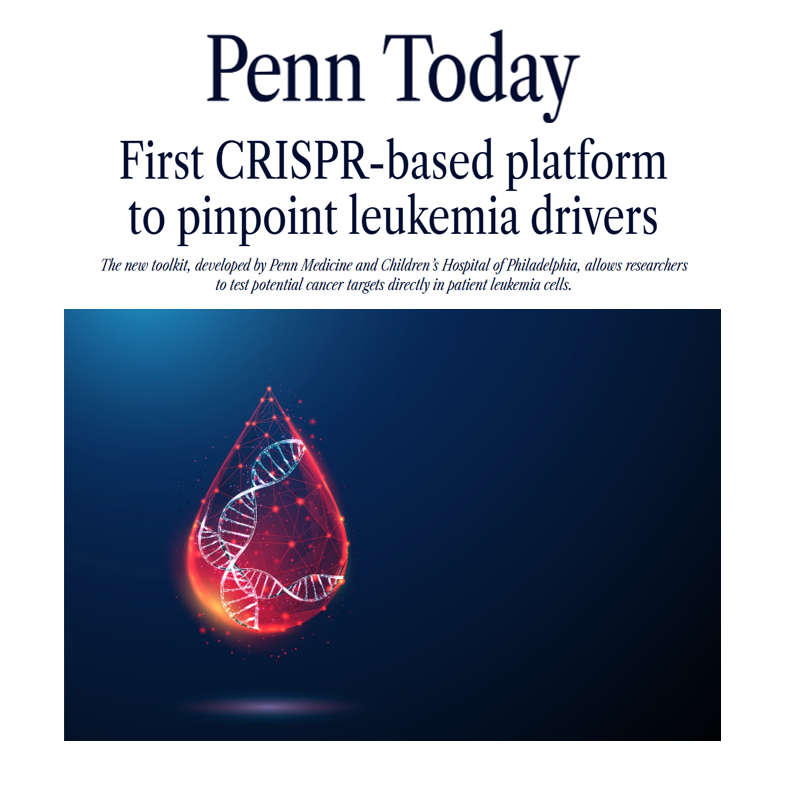
Researchers at Penn Medicine and Children’s Hospital of Philadelphia have developed a first-of-its-kind CRISPR-based platform that can be used directly on patients’ leukemia cells to identify the genes and regulatory elements driving acute myeloid leukemia (AML), an aggressive blood cancer. Unlike traditional methods that rely on lab-grown cell lines, this innovative approach works with real patient samples, offering a more accurate understanding of how cancer behaves and evolves. By enabling researchers to test hundreds of genetic changes at once, the platform can pinpoint which genes influence cancer growth and survival while also revealing how different cell populations within a single patient respond to treatment.
The implications of this research are significant, with the potential to accelerate the discovery of targeted therapies and better understand why some cancers become resistant to treatment. By bringing CRISPR tools closer to clinical application, this platform could one day help physicians tailor treatments based on each patient’s unique cancer biology. Philly Fights Cancer is proud to support this groundbreaking innovation, advancing research that moves us closer to more precise, effective cancer care. Read more about these exciting advancements in Penn Medicine News.
Share this post




Researchers at Penn Medicine and Children’s Hospital of Philadelphia have developed a first-of-its-kind CRISPR-based platform that can be used directly on patients’ leukemia cells to identify the genes and regulatory elements driving acute myeloid leukemia (AML), an aggressive blood cancer. Unlike traditional methods that rely on lab-grown cell lines, this innovative approach works with real patient samples, offering a more accurate understanding of how cancer behaves and evolves. By enabling researchers to test hundreds of genetic changes at once, the platform can pinpoint which genes influence cancer growth and survival while also revealing how different cell populations within a single patient respond to treatment.
The implications of this research are significant, with the potential to accelerate the discovery of targeted therapies and better understand why some cancers become resistant to treatment. By bringing CRISPR tools closer to clinical application, this platform could one day help physicians tailor treatments based on each patient’s unique cancer biology. Philly Fights Cancer is proud to support this groundbreaking innovation, advancing research that moves us closer to more precise, effective cancer care. Read more about these exciting advancements in Penn Medicine News.