News & Updates
New CAR T Cell Strategy Targets the Most Common Form of Heart Disease
Monday, December 22, 2025
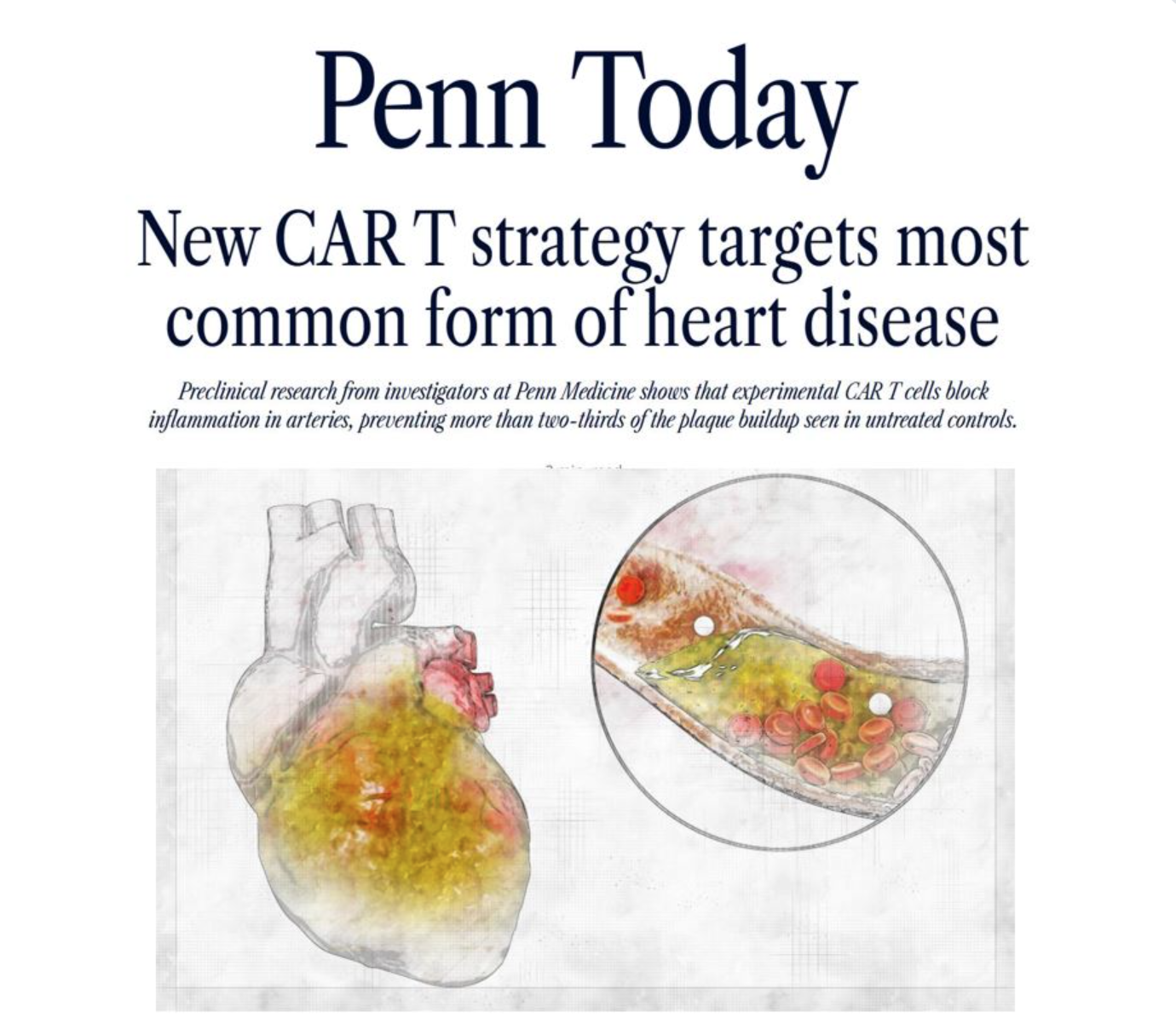
Researchers at Penn Medicine have uncovered a promising new use for CAR T cell therapy, a personalized immunotherapy best known for treating certain cancers. In a preclinical study published in Circulation, investigators demonstrated that experimental CAR T cells could significantly reduce inflammation in arteries, preventing more than two-thirds of plaque buildup associated with atherosclerosis, the most common form of heart disease. By targeting oxidized LDL, a key driver of arterial inflammation, the therapy addresses a fundamental cause of heart attacks and strokes—conditions responsible for millions of deaths worldwide each year. The findings suggest that CAR T technology could one day complement existing cholesterol-lowering treatments, particularly for patients who remain at high risk despite standard care.
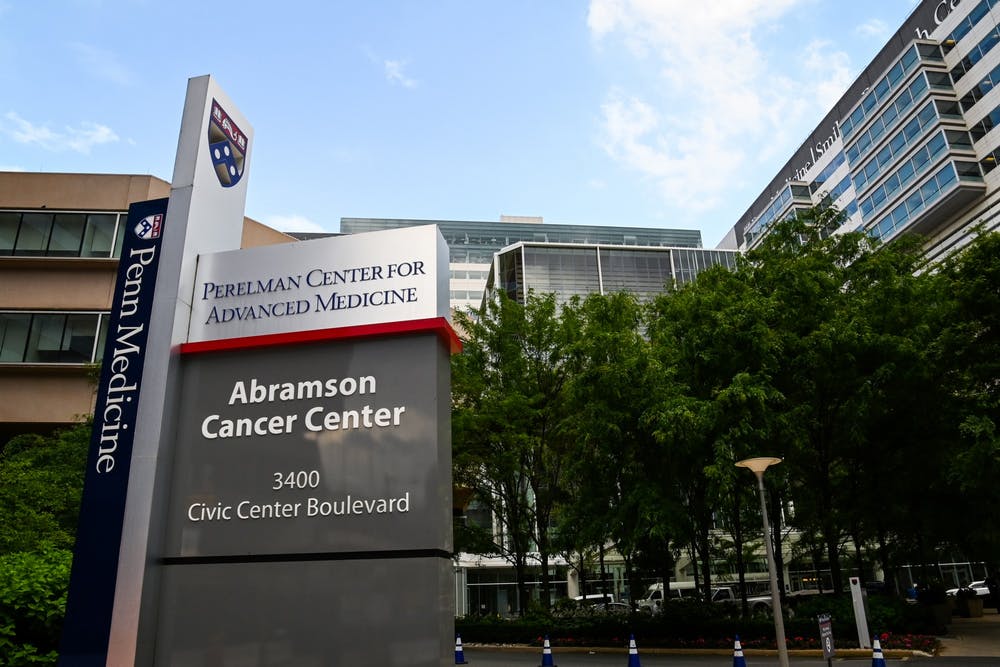
This research highlights the power of translational science at Penn Medicine, where advances developed in cancer immunotherapy are being adapted to tackle other major diseases. Led by experts at the Perelman School of Medicine, the study underscores how deep expertise in CAR T cell engineering can open new therapeutic pathways beyond oncology, while still building on the same scientific foundations that have transformed cancer treatment. This spirit of innovation reflects the work supported through Philly Fights Cancer, which raises critical funds to advance the groundbreaking research and clinical trials at the Abramson Cancer Center.
Share this post




Researchers at Penn Medicine have uncovered a promising new use for CAR T cell therapy, a personalized immunotherapy best known for treating certain cancers. In a preclinical study published in Circulation, investigators demonstrated that experimental CAR T cells could significantly reduce inflammation in arteries, preventing more than two-thirds of plaque buildup associated with atherosclerosis, the most common form of heart disease. By targeting oxidized LDL, a key driver of arterial inflammation, the therapy addresses a fundamental cause of heart attacks and strokes—conditions responsible for millions of deaths worldwide each year. The findings suggest that CAR T technology could one day complement existing cholesterol-lowering treatments, particularly for patients who remain at high risk despite standard care.
This research highlights the power of translational science at Penn Medicine, where advances developed in cancer immunotherapy are being adapted to tackle other major diseases. Led by experts at the Perelman School of Medicine, the study underscores how deep expertise in CAR T cell engineering can open new therapeutic pathways beyond oncology, while still building on the same scientific foundations that have transformed cancer treatment. This spirit of innovation reflects the work supported through Philly Fights Cancer, which raises critical funds to advance the groundbreaking research and clinical trials at the Abramson Cancer Center.